When two technologies share one housing
Multifunction aesthetic devices have become popular in beauty salons and aesthetic medicine clinics.
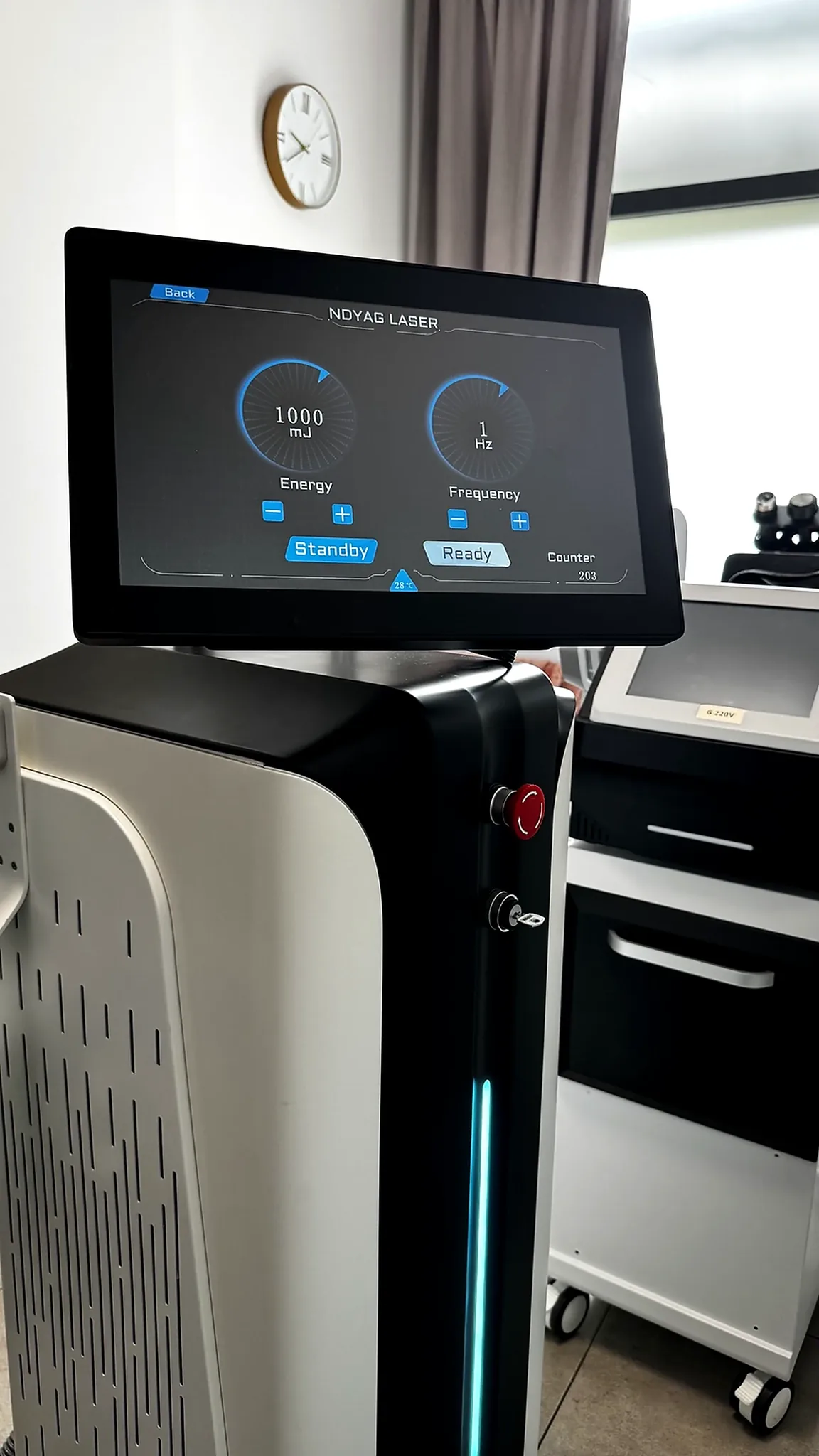
One device may combine diode laser hair removal, Nd:YAG tattoo removal and other technologies.
This is convenient for clinic owners, but multifunctionality also means greater technical complexity.
Several handpieces may share cooling, power supply and control systems.
An operating error involving one part can therefore sometimes affect other components.
During a service visit, Laser Tech Service specialists encountered a case illustrating this well.
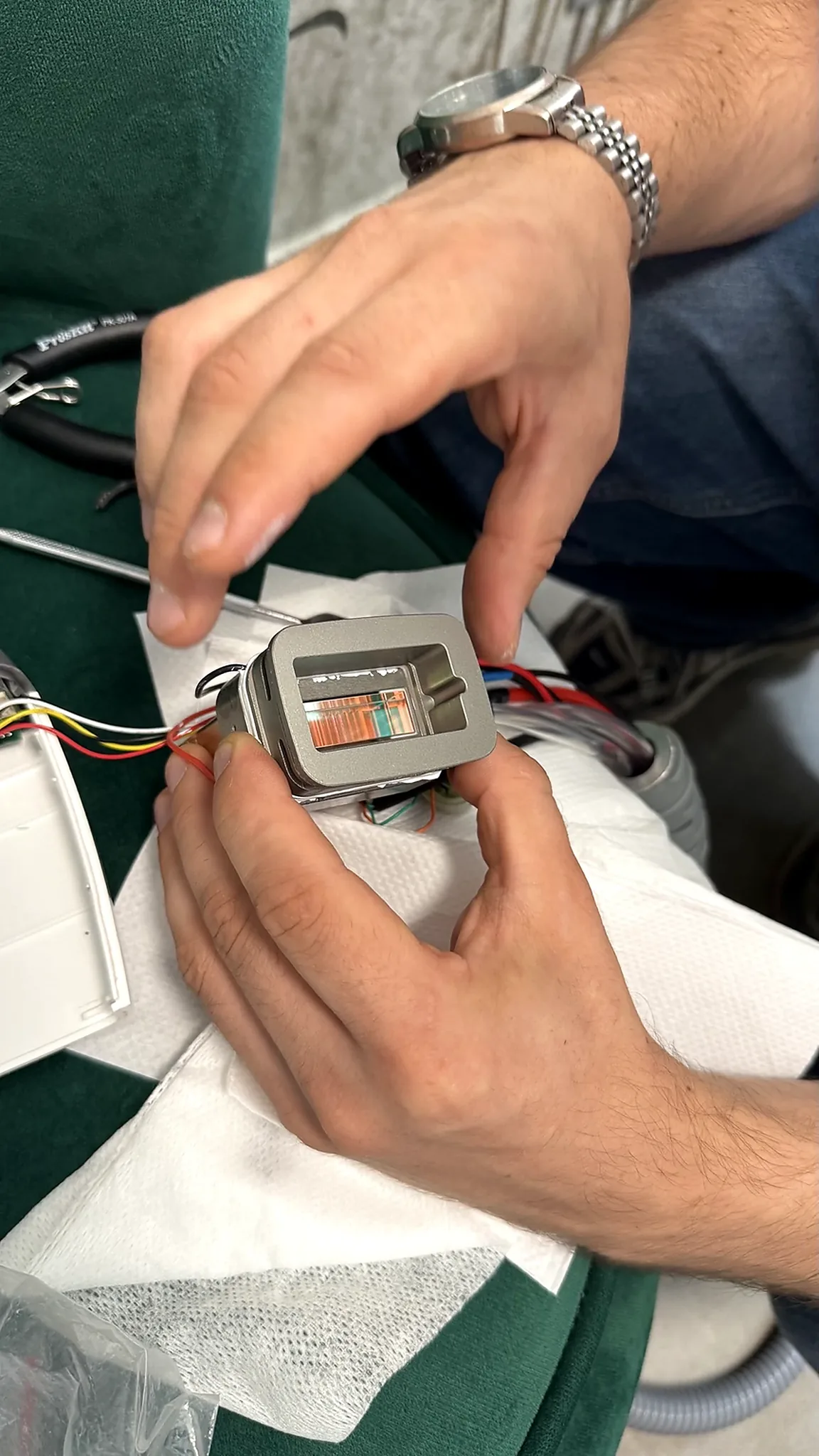
One aesthetic device had two simultaneous faults: a damaged Peltier module in the hair removal handpiece and a damaged Nd:YAG laser component.
First problem: why did the Peltier module overheat?
The hair removal handpiece used contact cooling based on a thermoelectric Peltier module.
This component lowers the temperature of the treatment surface that contacts the skin.
When electrical current passes through a Peltier module, one side cools while the other heats up.
The physical principle is important to understand.
A Peltier module does not eliminate heat — it transfers it from the cold side to the hot side.
Effective cooling therefore requires continuous heat removal from the hot side.
Aesthetic lasers often use liquid cooling for this purpose.
If heat is not removed correctly, component temperature rises, cooling effectiveness falls and the module faces greater thermal stress.
Prolonged operation under these conditions can lead to failure.
This was the problem encountered by the device owner.
An error the client did not recognise as an error
During diagnostics, Laser Tech Service specialists identified an important operating detail.
The client connected only the handpiece needed for the current treatment.
The second handpiece remained disconnected.
At first glance, this seems logical. If the clinic is performing hair removal, why connect the Nd:YAG handpiece?
However, this particular device required both handpieces to be connected simultaneously.
Failing to meet this requirement disrupted cooling system operation.
The Peltier module consequently operated at an elevated temperature and was damaged.
This shows why correct operation cannot be judged solely by whether a device starts and performs a treatment.
A device can start and operate while individual components experience excessive thermal loads.
Why is replacing the Peltier module alone insufficient?
Imagine that the specialist had only replaced the damaged module.
A new Peltier module would restore cooling, and the client would continue using the device in the same way.
If the overheating cause remained, however, the new part could fail again.
Diagnostics should therefore assess the component, the entire cooling system, connection configuration and operating conditions.
In this case, Laser Tech Service replaced the faulty Peltier module and established the reason for overheating.
The specialists also explained the requirement to connect both handpieces correctly.
Second problem: a damaged Nd:YAG laser component
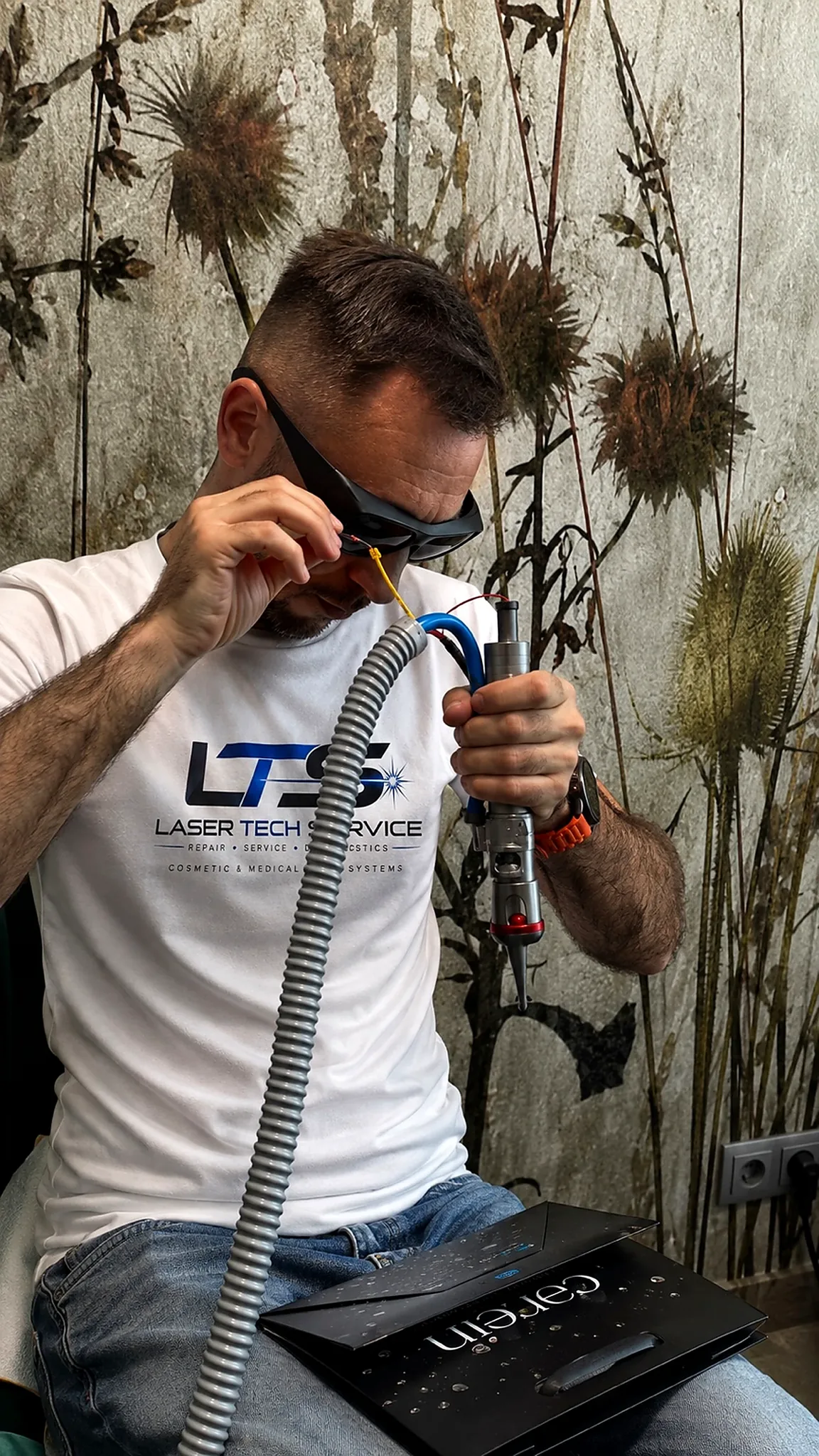
During the same visit, a fault was identified in the second handpiece — Nd:YAG.
Nd:YAG technology uses an active laser medium, conventionally a neodymium-doped yttrium aluminium garnet crystal.
In aesthetic equipment, pulsed Nd:YAG lasers are used for applications including tattoo and pigmentation removal.
The laser system should generate stable pulses with specified parameters.
Damage to the active element or other optical components can reduce emission efficiency, cause instability or render the handpiece inoperative.
In this case, Laser Tech Service specialists replaced the faulty laser component.
The repair did not end there.
Why is calibration needed after replacing an Nd:YAG laser component?
A common repair mistake is assuming that fitting a new part automatically restores correct operating parameters.
In practice, this is not always so.
A laser system contains interacting components; optical resonator, pulse generation and output radiation parameters all matter.
After replacing a laser component, operating parameters may need checking and adjustment.
What does Nd:YAG laser calibration involve?
Depending on device design and manufacturer requirements, calibration may include:
1. Checking laser radiation parameters.
Assessing pulse energy and whether actual parameters match the set values.
2. Checking generation stability.
Checking the repeatability of laser pulse parameters in the specified operating modes.
3. Checking the optical system.
Assessing optical component positioning and operation after replacement.
4. Checking operating modes.
Checking the laser system in the modes specified by the manufacturer.
The exact calibration scope depends on device design and the measuring equipment used.
In this case, Laser Tech Service specialists calibrated the Nd:YAG system after installing the new laser component.
This was an essential step in restoring and checking handpiece operation after repair.
Why does cooling matter beyond laser hair removal?
Stable thermal conditions are needed by almost every high-energy laser device.
When laser radiation is generated, some input energy becomes heat.
Inadequate heat removal can affect optical and electronic components.
Depending on the design, overheating can cause unstable radiation parameters, premature wear and activation of protective systems.
Cooling is therefore an integral part of laser design, not an auxiliary function.
Can a device be used with only one handpiece connected?
There is no universal answer.
Some models permit safe operation with one handpiece connected.
Others require several handpieces connected simultaneously, even when only one is in use.
This depends on hydraulic design, connections and control algorithms.
Read the manufacturer’s instructions before using the device.
If documentation is unavailable or the design is unclear, consult specialists.
This is particularly relevant to used equipment, where the previous owner may not have supplied complete technical documentation.
Five signs of laser handpiece cooling problems
Aesthetic clinic owners should watch for:
- The handpiece contact surface cooling less effectively than usual.
- The handpiece becoming noticeably hot during use.
- Coolant temperature rising faster than usual.
- Cooling system error messages.
- The device intermittently stopping or entering a protective mode.
If these symptoms occur, stop using the device until the cause is established.
Continuing with faulty cooling may increase the eventual repair cost.
Result: two faults, a comprehensive approach
During one service visit, Laser Tech Service specialists completed:
- Diagnostics of both handpieces.
- Replacement of the faulty Peltier module.
- Identification of the handpiece connection error.
- Replacement of the Nd:YAG laser component.
- Calibration of the Nd:YAG laser system.
- Device checks after repair.
This case demonstrates an important servicing principle: finding and replacing the damaged part alone is insufficient.
The cause must be understood and conditions that could lead to recurrence addressed.
Summary
One device may combine several technologies, but reliability depends on every interacting system working correctly.
Here, incorrect handpiece connections caused cooling problems, while the second handpiece needed a laser component replacement followed by calibration.
Correct use, timely diagnostics and professional maintenance can extend equipment life and help avoid expensive downtime.
Laser Tech Service provides diagnostics, repairs, laser component replacement and calibration of aesthetic equipment throughout Poland.
Related resources and services
- Photographs and repair details
- Diode laser diagnostics
- Handpiece and applicator refurbishment
- Maintenance
Does your device need diagnostics or repair?
Contact Laser Tech Service and describe the fault symptoms.
Contact the service team WhatsApp