What is smartPULS?
smartPULS is a German-made professional cosmetic device using Intense Pulsed Light (IPL) technology.
It provides treatment modes for hair removal and skin rejuvenation, along with an individual settings mode.
The device belongs to an earlier generation of professional cosmetic equipment. Markings on the unit we inspected suggest a production period around 2008, although the exact manufacturing date has not been independently verified.
Its electronic architecture makes it an interesting example of how advanced some cosmetic systems had already become.
Linux inside a cosmetic device
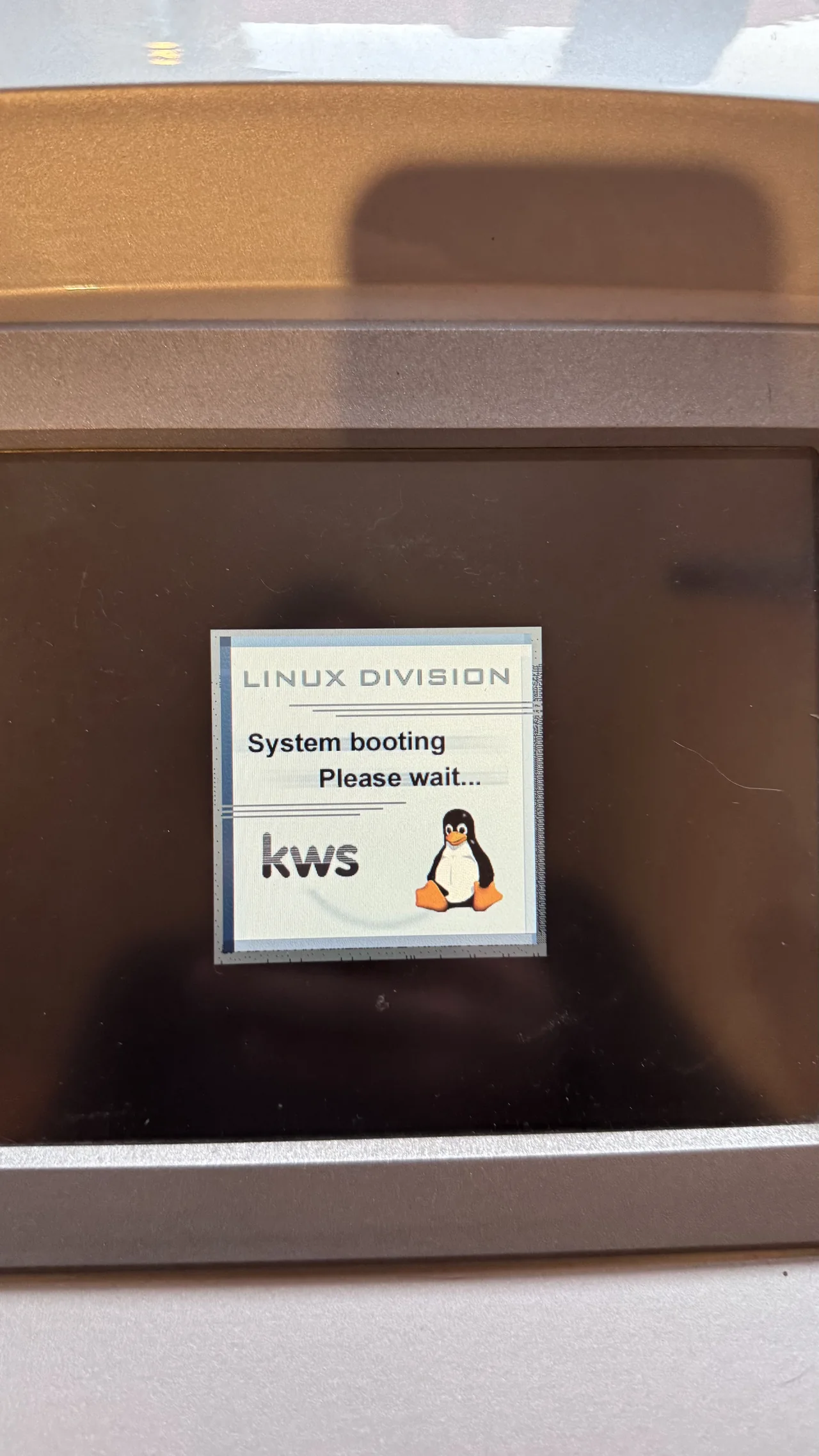
One of the most interesting discoveries appeared during startup.
The screen displayed the Linux mascot Tux, the words “LINUX DIVISION”, the KWS logo and the message “System booting. Please wait...”.
This indicates that smartPULS uses a Linux-based software platform.
Today, Linux is widely used in industrial controllers, medical equipment and embedded systems. However, seeing this architecture in a cosmetic device from the first decade of the 2000s is still impressive.
The machine features a graphical touchscreen interface, user accounts, dedicated treatment programs and a separate service section.
The exact Linux distribution and kernel version remain unknown, but the startup screen clearly identifies the software family.
The client suspected a burned-out IPL lamp
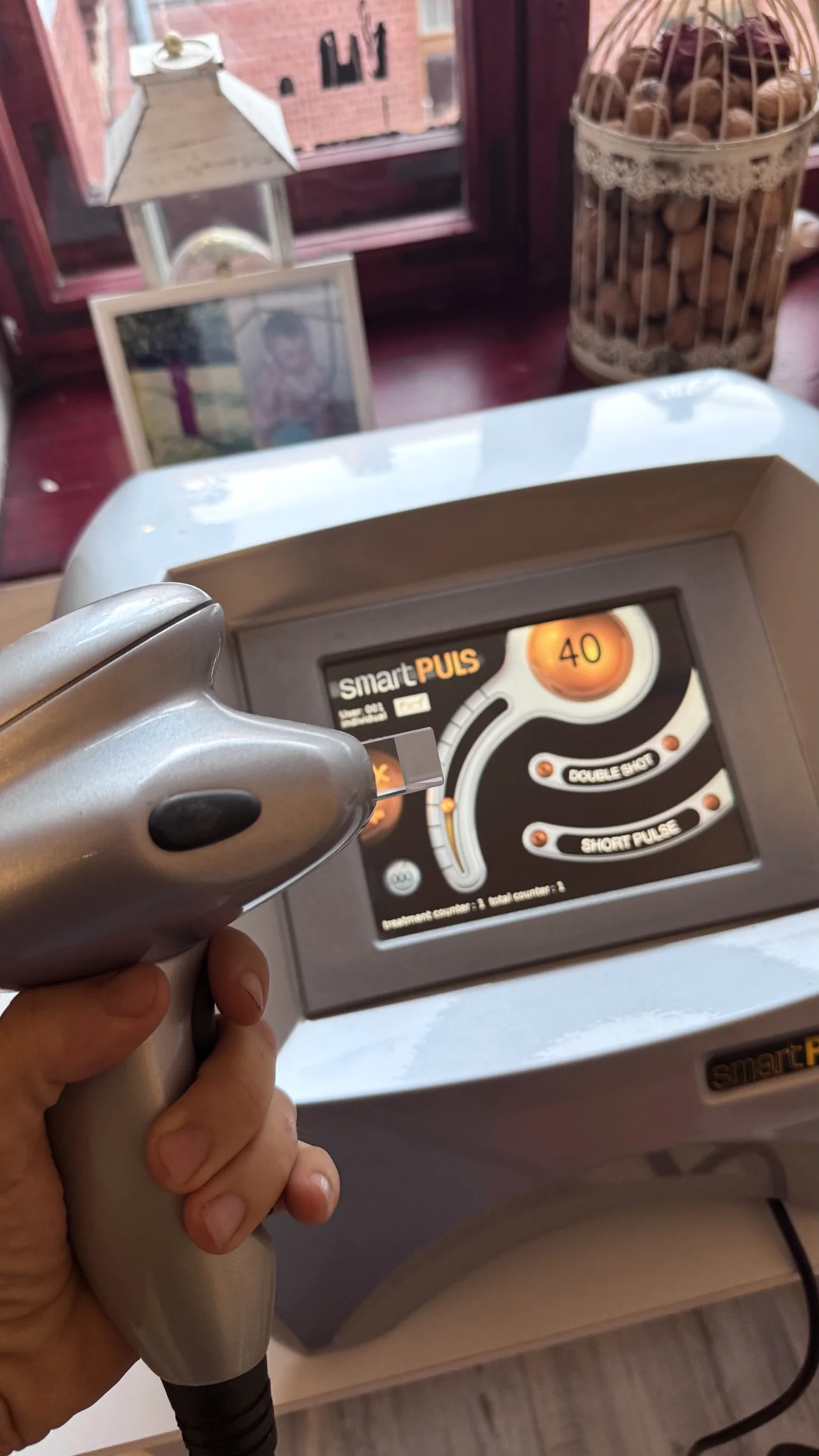
A client from Świdnica contacted Laser Tech Service because the smartPULS handpiece had stopped producing light pulses.
The initial assumption was that the lamp had burned out.
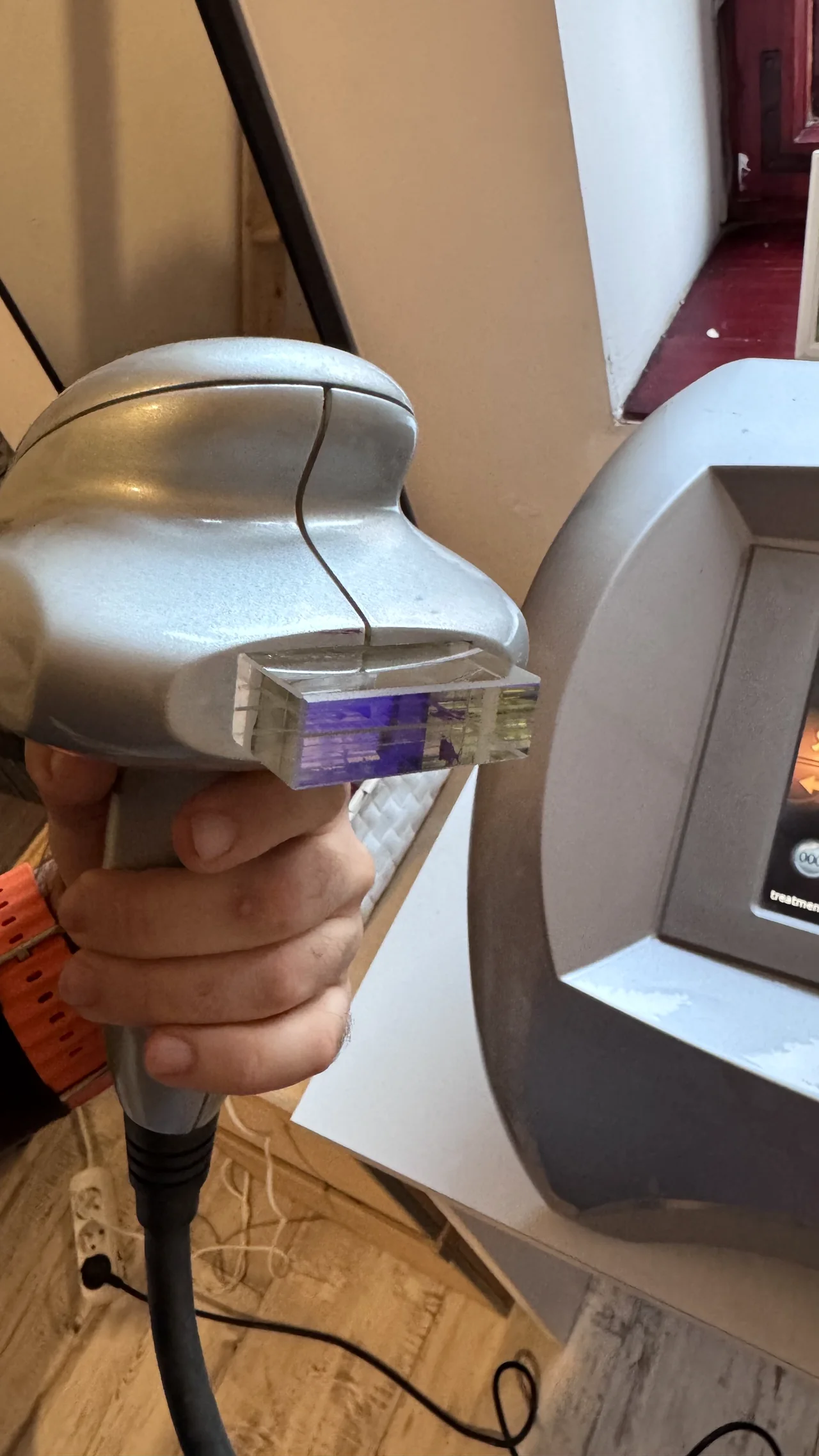
However, during the on-site inspection, our technicians found no visible signs of a burned-out lamp.
This prompted a more detailed investigation of the device's control system and handpiece electronics.
The 30,000-pulse maintenance interval
The smartPULS user manual specifies lamp replacement after 30,000 pulses.
This is a manufacturer-defined service interval that may reflect expected component wear, treatment performance and operational safety requirements.
The interesting question in our case was why the handpiece had stopped operating despite the absence of visible lamp damage.
Our investigation suggested that the operating restriction could involve the main controller and the handpiece electrical circuit rather than a dedicated pulse counter physically located inside the handpiece.
Could an electrical fuse be involved?
During diagnostics, we examined the possibility that the interruption was associated with an electrical protection component in the handpiece circuit.
Such a mechanism could prevent the handpiece from operating even when the lamp itself remains physically intact.
We also considered whether an electrical signal associated with a maintenance threshold could affect that protection component.
However, without the manufacturer's circuit diagrams and electrical measurements, it would be inaccurate to state as fact that smartPULS deliberately burns a fuse using a high-energy signal at exactly 30,000 pulses.
There is also insufficient evidence to conclude that such a design was intended solely to force customers to return their equipment for paid servicing.
These possibilities remain technical hypotheses rather than verified manufacturer specifications.
Can an IPL lamp last 100,000 pulses?
IPL lamp lifespan depends on several factors, including lamp construction, pulse energy, cooling performance, operating frequency and maintenance history.
Some IPL lamps are designed for substantially more than 30,000 pulses. However, that does not establish that the particular lamp used in smartPULS can deliver 100,000 pulses without deterioration.
A lamp producing visible flashes does not necessarily mean it continues to deliver the required energy and spectral characteristics.
Proper evaluation requires technical measurements and an assessment of the lamp and cooling system.
For this device, the manufacturer's 30,000-pulse replacement interval remains the documented reference.
How was the problem resolved?
Laser Tech Service technicians investigated the cause of the interruption and restored the device to operation.
The case demonstrated that a handpiece failing to produce pulses does not always mean its lamp has visibly burned out.
Nevertheless, restoring the ability to produce a pulse does not by itself establish that the lamp is suitable for continued clinical or cosmetic use. Technical verification is essential.
Why older cosmetic devices are still worth servicing
Older equipment can feature durable construction, repairable electronics and well-designed control systems.
With proper diagnostics, replacement parts and safety testing, some older machines can remain useful rather than being discarded immediately.
Laser Tech Service provides IPL equipment repair, cosmetic laser servicing, handpiece diagnostics, electronic repairs and preventive maintenance in Wrocław, Świdnica and throughout Poland.
Has your IPL handpiece stopped producing pulses?
Contact Laser Tech Service for professional diagnostics before replacing expensive components.