What is a Peltier module?
A Peltier module, also called a TEC, is a thermoelectric component that transfers heat between two sides when supplied with current. It uses the Peltier effect: current passing through junctions of different materials is associated with heat absorption or release. A typical semiconductor module contains many such elements between ceramic plates.
During cooling, one side absorbs heat from the cooled assembly and the other passes it onwards. “Cold” and “hot” describe their functions, not fixed temperatures. The module needs both electrical power and effective heat removal. It is not a self-contained refrigerator that can simply be connected to any voltage source.
The construction principles are described in Ferrotec’s technical documentation. A TEC may form part of contact cooling in aesthetic equipment, but is not fitted to every laser. The particular handpiece arrangement must be established from device documentation.
Why use a Peltier module in a laser handpiece?
In a TEC-based design, the cooled contact surface helps control skin temperature during treatment. This supports patient comfort and limits unwanted thermal effects. Effective cooling does not replace appropriate treatment settings, operator qualifications or the manufacturer’s procedures.
Handpiece cooling is the task of an entire assembly. Heat travels from the contact surface through the thermal interface and module to the heat-removal component. Depending on the design, a liquid circuit, heat exchanger and ventilation follow. Power supply, sensors and the controller establish operating conditions and regulation.
The hot side must dissipate both the heat absorbed from the cooled area and the electrically supplied energy. A working TEC therefore cannot compensate for inadequate heat removal. This relationship is explained in Ferrotec’s discussion of heat sinking. Deteriorating contact cooling requires stopping handpiece use and arranging a service assessment.
Why does a Peltier module stop working?
Possible failure mechanisms must be distinguished from a diagnosis of an individual device. The list below identifies areas for a specialist to check. It does not mean every problem occurred in the ESTETECH device described later.
- Overheating: inadequate heat removal from the hot side can take the module outside its permitted operating conditions.
- Liquid circuit fault: a faulty pump, restricted passages or insufficient flow can impair assembly cooling where such a circuit is fitted.
- Incorrect thermal contact: uneven surfaces, contamination or unsuitable clamping pressure impede heat transfer between surfaces.
- Thermal interface problem: unsuitable, degraded or incorrectly applied material can increase the joint’s thermal resistance.
- Electrical fault: a supply, wiring or connection problem can stop cooling; this does not always mean the TEC itself is damaged.
- Mechanical damage: stress, impact or uneven loading can damage the module’s delicate components.
- Long-term operating conditions: repeated temperature changes stress joints and materials. Their effect depends on design and the temperature range.
Device age alone does not determine TEC condition. In its reliability guidance, Ferrotec distinguishes steady operation from thermal cycling. Results for a particular tested module should not be extrapolated to an unidentified part in a laser.
What are the symptoms of faulty cooling?
The handpiece may not cool, its contact surface may stay warm or temperature may fluctuate. Failure to reach the setpoint is another possible sign. Where supported, the device may display a temperature or cooling message. No alarm, however, does not establish correct operation.
Similar symptoms can result from the circulation pump, contamination, insufficient fluid flow, temperature sensor, power supply or control electronics. The screen reading does not always represent the contact surface temperature; this depends on sensor location and data presentation.
Loss of cooling does not automatically mean Peltier module failure. Professional aesthetic laser diagnostics is required. Servicing distinguishes heat-removal, supply, control and module problems. Replacing a part on the basis of one symptom can leave the actual cause unresolved.
Why does suitable thermal paste matter?
Even apparently smooth surfaces have microscopic irregularities. A thermal interface reduces air gaps and assists heat transfer. It does not replace correctly matched surfaces or repair mechanical damage. Material properties must suit the design and operating conditions.
Excess paste can form an unnecessary layer that increases thermal resistance, while an unsuitable material may fail to meet assembly requirements. Discontinuous contact also impairs heat exchange. There is no universal paste or application method for every handpiece.
Ferrotec’s installation guidance emphasises surfaces and thermal coupling. In treatment equipment, the individual assembly manufacturer’s requirements govern interface type, material compatibility and mounting. A photograph of a product tube is neither a material specification nor a recommendation for another device.
Why avoid replacing a Peltier module yourself?
Similar appearance does not establish interchangeability. Voltage and current specifications, dimensions, thickness, heat-pumping capacity and conditions on both sides matter. A stated power figure alone is insufficient for selection. These issues are discussed in the TEC module selection guide.
Incorrect polarity can reverse heat transfer direction. Poor seating or uneven pressure can damage ceramic plates or impair thermal contact. An unsuitable component may also be incompatible with the existing control system. Further failure or handpiece damage can result.
Laser handpiece repair requires assessment of the entire assembly and checks after reassembly. Opening the housing, modifying wiring and selecting a component are not routine operator tasks. The scope is determined by the aesthetic laser service team from the device and documentation, without bypassing safety systems.
Example: ESTETECH repair in Poznań
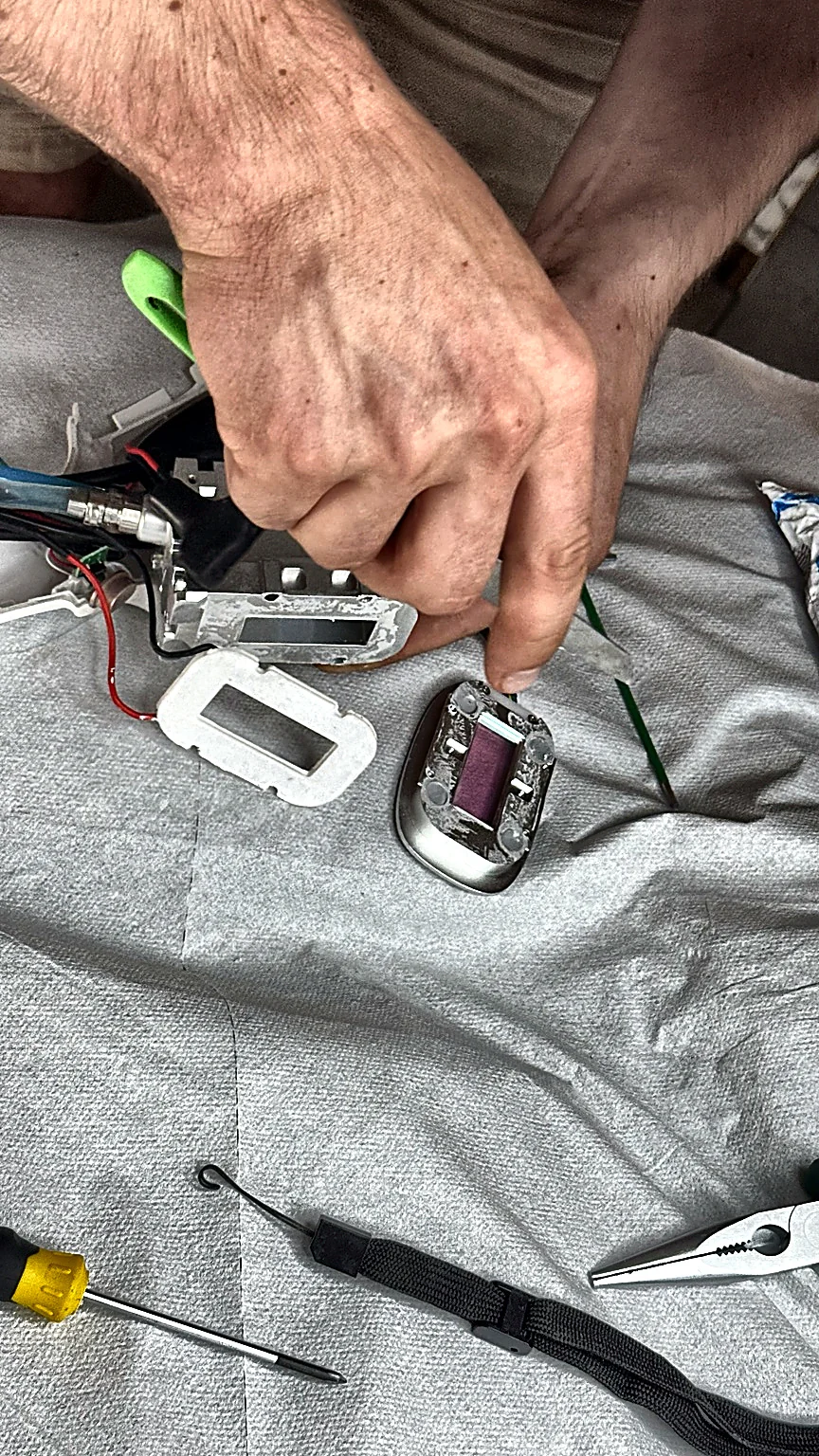
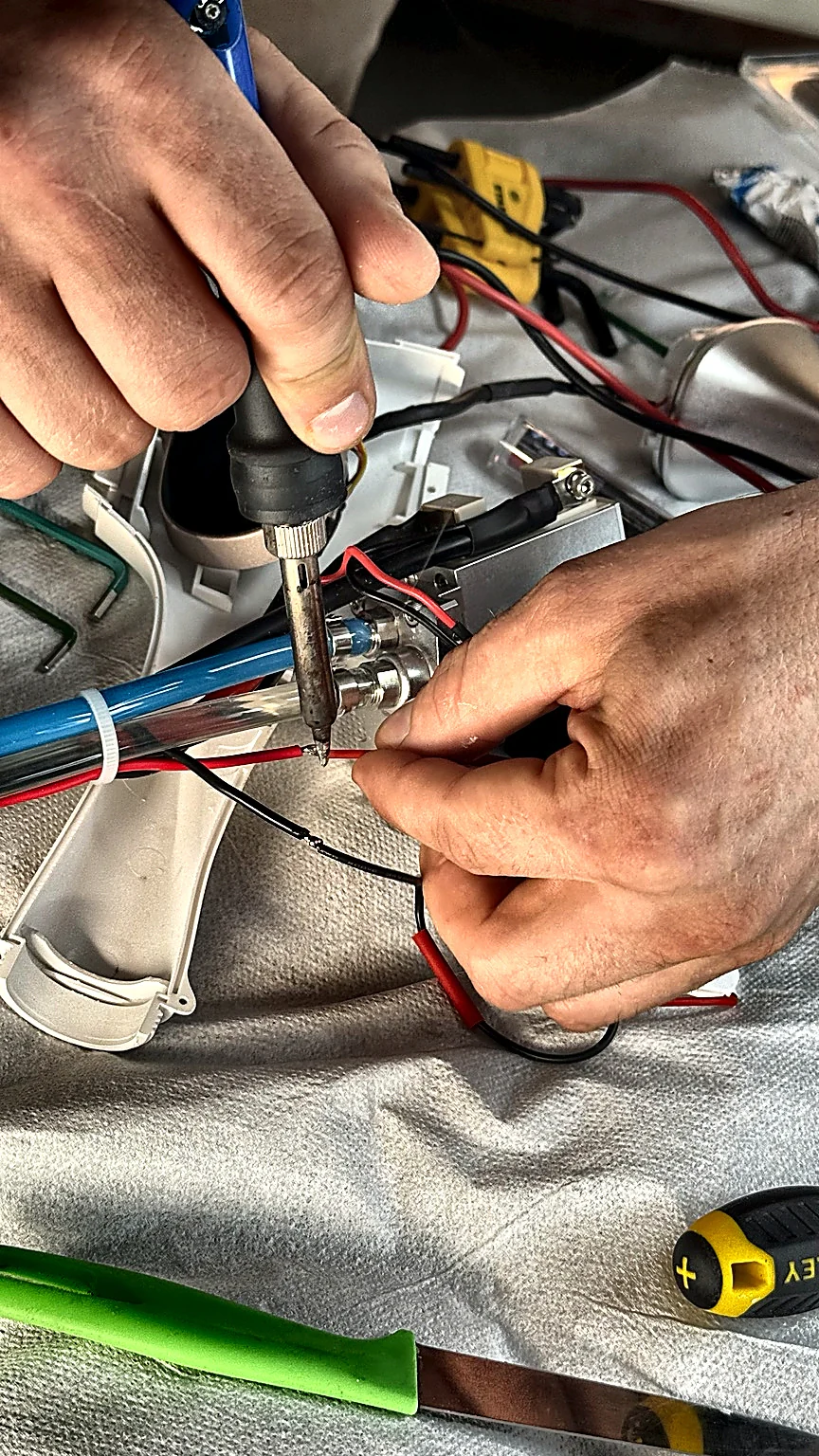
An ESTETECH handpiece’s treatment surface stopped cooling correctly. On-site diagnostics in Poznań confirmed a faulty Peltier module. It was replaced with a compatible component, the thermal interface and electrical connections were renewed, and maintenance was completed. Device and cooling operation were checked after reassembly, and the device returned to service.
The ESTETECH Peltier replacement case study includes photographs. A faulty TEC was the confirmed cause of lost cooling. The supplied information does not establish why the module itself failed, so we do not attribute pump failure, overheating or unsuitable paste to this repair.
How can cooling fault risks be reduced?
Regular maintenance should reflect device design and usage intensity. For liquid-cooled equipment, circulation, circuit cleanliness, connection condition and manufacturer-approved fluid are important. Read more in the article on water and cooling system maintenance.
Operators should monitor readings and messages as instructed, report changes in handpiece behaviour and keep service records. Fluid, additives and replacement intervals should not be selected from another model’s guidance. Temperature checks do not mean testing a faulty handpiece on skin.
Scheduled technical inspection allows assessment before symptoms worsen. The fan repair in Wrocław shows a different cooling fault; it does not establish the same cause in the ESTETECH device.
When should you contact the service team?
If the contact surface does not cool correctly, stop using the handpiece until a specialist checks it. Provide the device identification, symptoms, exact screen message and service history. Knowing whether the symptom occurs at start-up or later helps prepare diagnostics, but cannot replace assessment.
The scope of aesthetic laser and cooling repairs depends on the identified fault. The service price list provides a reference; the individual cost is established after defining the work. Laser servicing in Poznań and an on-site visit can be arranged by contacting Laser Tech Service.