What can build up over 10–15 years?
Years of use allow source wear, contaminated optics, ageing connections and cooling problems to accumulate. The calendar alone does not tell you operating hours, workload, maintenance quality or which components have already been replaced. Two devices of the same age may be in very different condition.
It would be wrong to declare every 10–15-year-old laser ineffective. The real concern is worn equipment that keeps treating clients without meaningful checks. A refreshed panel or a confident sales pitch cannot fill the gap left by an undocumented service history.
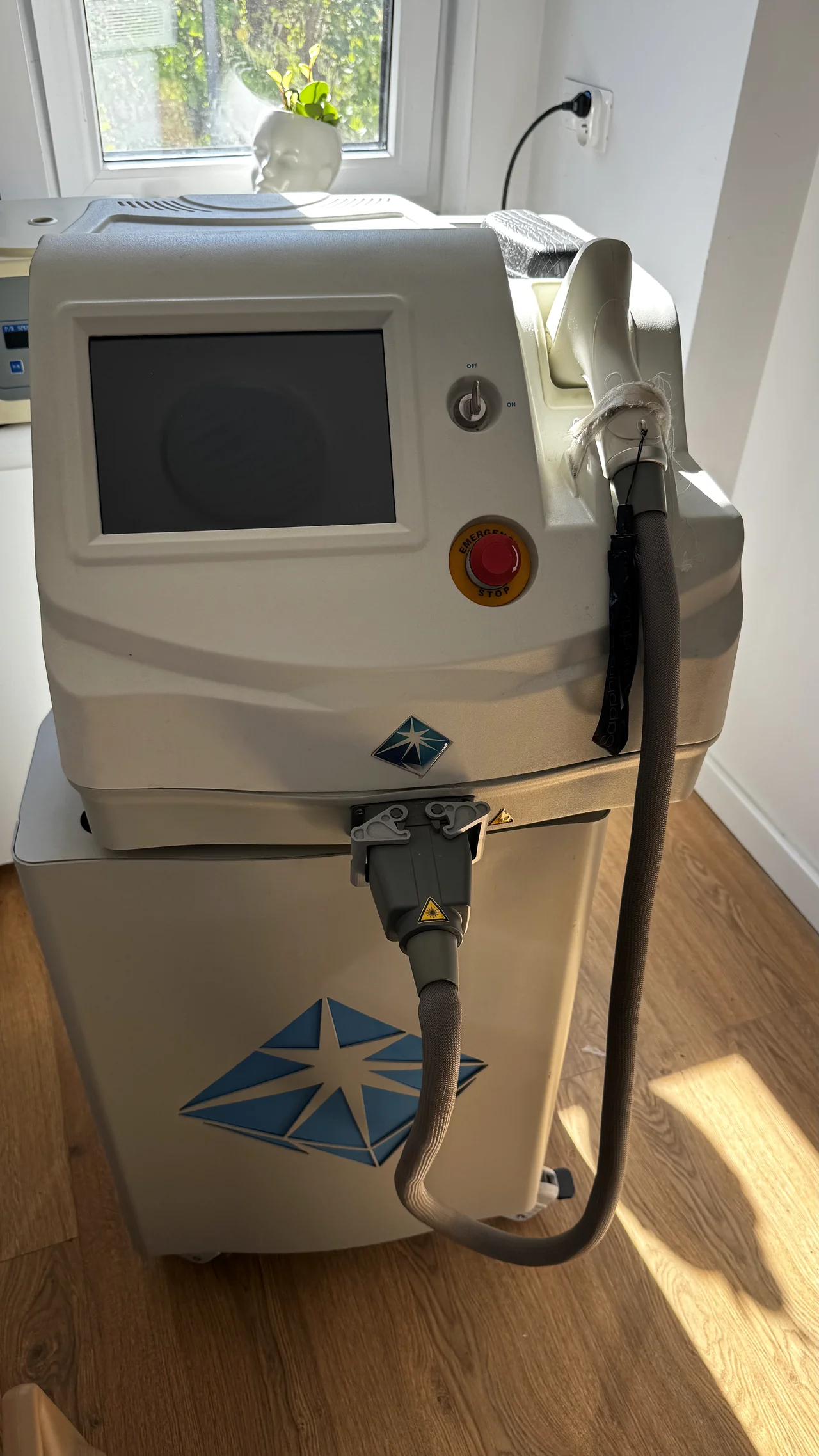
Diode ageing can reduce optical output
As a diode source degrades, it may require more current to maintain the same optical output, or produce less light at an unchanged current. Operating temperature affects degradation. The mechanism is discussed in the Sony Semiconductor technical handbook.
This is a possible ageing mechanism, not a diagnosis of every old device. A production date or photograph cannot establish a percentage loss of power or prove a module needs replacing. The actual source and operating mode need appropriate measurements.
Age does not automatically change the nominal wavelength
A laser’s nominal wavelength follows its source design; semiconductor materials play a key role in diode lasers, as Newport explains. Ageing does not automatically turn one nominal wavelength into another. Temperature can influence emission parameters, but that does not justify claiming that every older laser now emits at a different wavelength.
Asking which source a salon uses is sensible. Guessing its spectrum from the condition of its casing is not. Model specifications describe the design; current checks establish the condition of the particular device.
Optics, pulses and cooling deserve equal attention
The source is only part of the optical path. Dirty or damaged optics may reduce transmission. Power supply or control problems can affect pulse repeatability. Insufficient coolant or disrupted circulation are further reasons to investigate equipment condition. A responsive screen rules out none of these issues.
Removing heat from internal components and cooling the skin are connected but distinct functions. One symptom does not diagnose the whole system. Nevertheless, continuing treatment through overheating or cooling problems simply because the controls still respond is not an acceptable way to assess a fault.
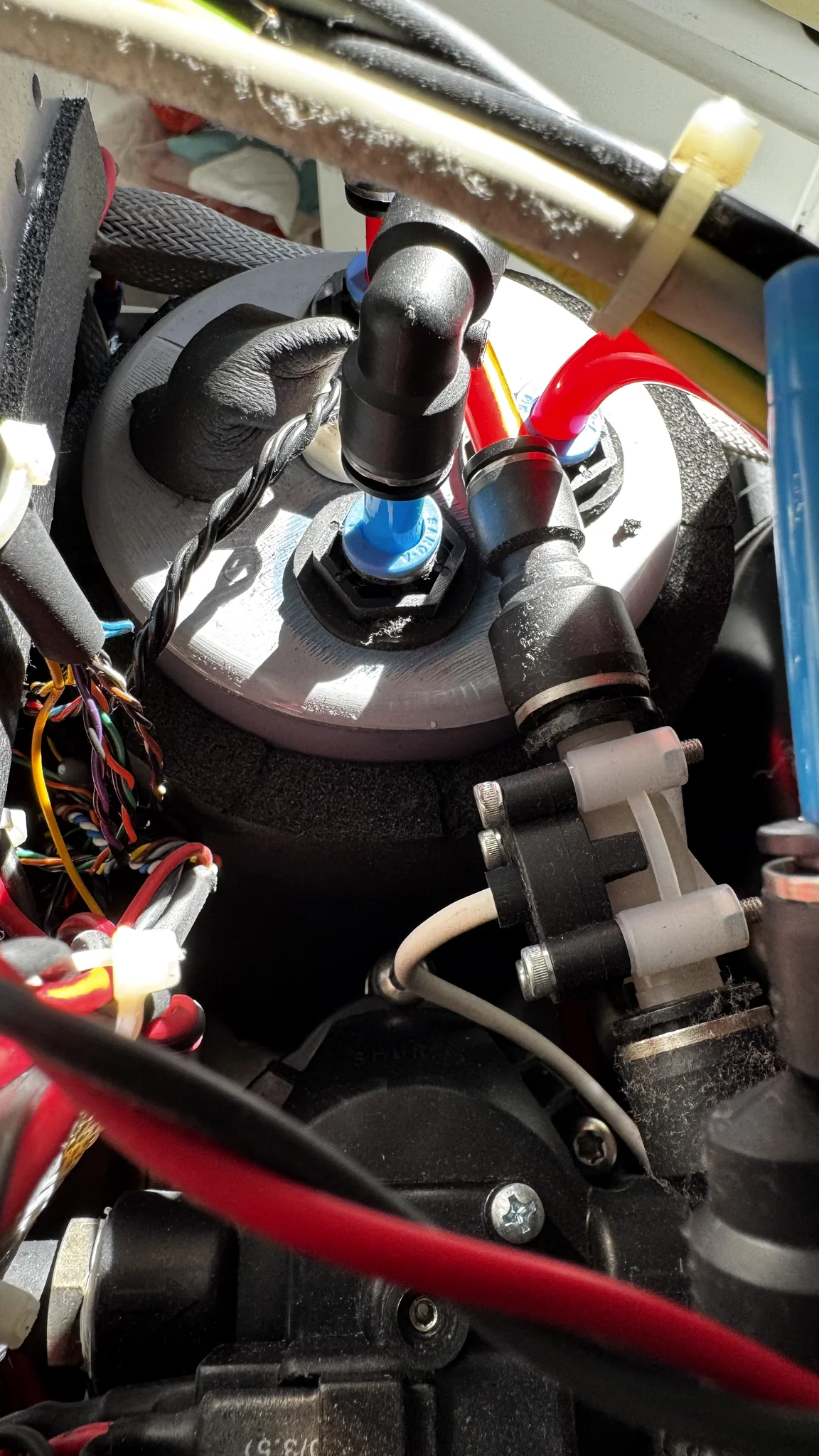
A setting on a screen is not an independent measurement
A displayed value may be a setpoint or a value calculated by the electronics. It does not by itself verify the energy leaving the handpiece. Power is measured in watts, pulse energy in joules and fluence in joules per square centimetre. Fluence also depends on the illuminated area; these quantities are not interchangeable.
Emission checks require a suitable sensor, meter and procedure. Ophir’s calibration guidance explains the importance of calibration, wavelength, energy range and measurement conditions. A photograph of a large number on a screen is no substitute for that assessment.
Unintended under-delivery is different from a low-fluence protocol
If a device delivers less energy than the appropriate protocol calls for, the intended thermal effect may be insufficient. Yet lower fluence is not inherently ineffective. A comparative study by Halachmi and Lapidoth demonstrated effective treatment with lower values in a purpose-designed system. A controlled treatment mode and accidental loss of output through wear are different situations.
Cooling helps protect the skin surface from overheating, as explained in Health Canada’s guidance. Arbitrarily increasing settings is not a solution to unknown equipment condition. A trained operator must select parameters appropriate to the device and the person being treated.
The Sapphire case: maintenance, not evidence of failed treatments
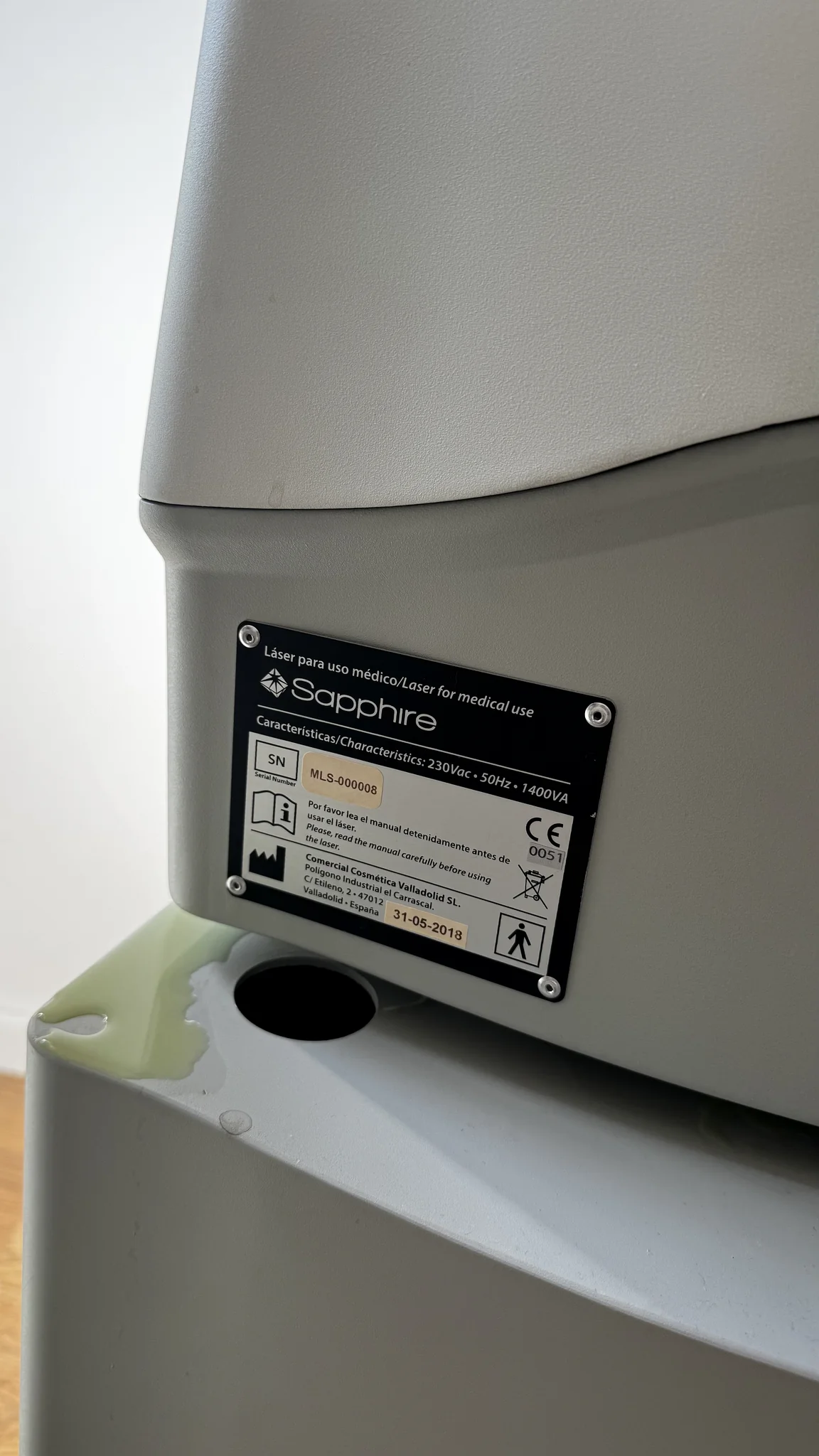
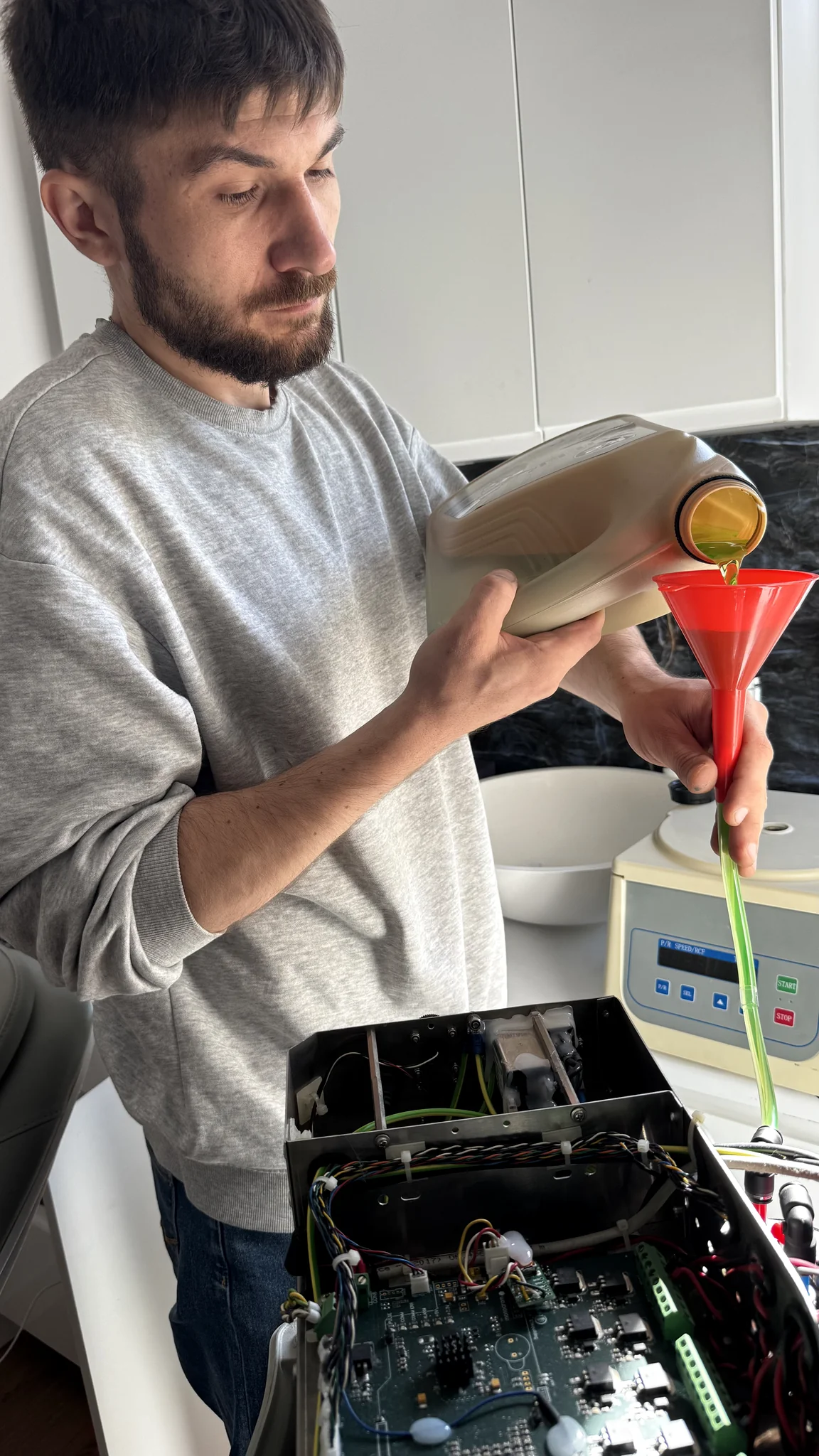
During a client visit in Legnica, Laser Tech Service found insufficient coolant in a Sapphire device. The remaining old fluid was removed, new coolant was added, and the device was cleaned. It was then started and its operation checked. The device works.
The nameplate shows 31.05.2018. This unit is not described as fifteen years old. Its photographs illustrate actual service work and the importance of cooling maintenance. They do not establish reduced optical output, ineffective treatments or a safety defect in this Sapphire; those findings were not part of the reported case.
Sapphire service in Legnica — coolant replacement and maintenance
Look for a service record, not a cosmetic refresh
A useful service record identifies what was checked and when. “Starts and runs” does not mean emission parameters were measured. Where the concern is power or pulse stability, cleaning alone cannot answer the question; the diagnostic scope must match the concern.
Laser servicing, repair and refurbishment also mean different things. Maintenance supports condition, repair addresses an identified fault, and refurbishment restores specified assemblies. An inspection does not automatically include all three or a measurement of laser emission. Ask what a particular service actually covered.
Questions worth asking before you commit
- What is the exact model, and what type of source does it use?
- When was the last service, and what did it cover?
- Are current parameter checks available where the documentation or equipment condition calls for them?
- How is cooling checked, and what happens when the device reports a fault?
- Who chooses the settings, and have they been trained on this model?
- How will progress be assessed, and how are disappointing results investigated?
You do not need to open the casing or interpret a laboratory report yourself. You can expect a clear, relevant answer. Dismissing reasonable questions about maintenance is a reason to reconsider a booking, not a reason to stop asking.
Our position: do not accept unverified equipment condition
We do not recommend treatment on outdated, worn equipment whose technical condition has not been confirmed. Age alone does not disqualify a device. Equally, a stylish salon and persuasive advertising do not make missing checks unimportant.
New equipment is no guarantee of results either. Treatment selection, skin and hair characteristics and operator competence matter; the American Academy of Dermatology explains these factors. Expect sound equipment and competent practice rather than reassurance based only on appearances.