When a device does not follow a command, attention naturally turns to the control used to issue it. On a CO₂ laser, this is often the foot pedal. It is a sensible starting point for checks, but not yet a reason to order a replacement. Between pressing the pedal and the device responding lies a circuit whose connections must all work correctly.
A symptom is not a diagnosis. A symptom describes what the user observed. A diagnosis identifies what actually failed and the evidence for that conclusion. An urgent repair at an aesthetic medicine studio in Poznań illustrates the difference.
Why begin with the foot pedal?
The most obvious suspect should be checked, not automatically replaced. Testing the pedal confirms or rules out the initial hypothesis. If faulty, it provides a basis for work on that component. If working correctly, the finding is equally useful: we know to look further.
In this case, the pedal was fully checked and proved completely functional. This did not end diagnostics; it organised the next steps. The next question was where, further along the circuit, the correctly issued command was being lost.
A working pedal redirects the investigation
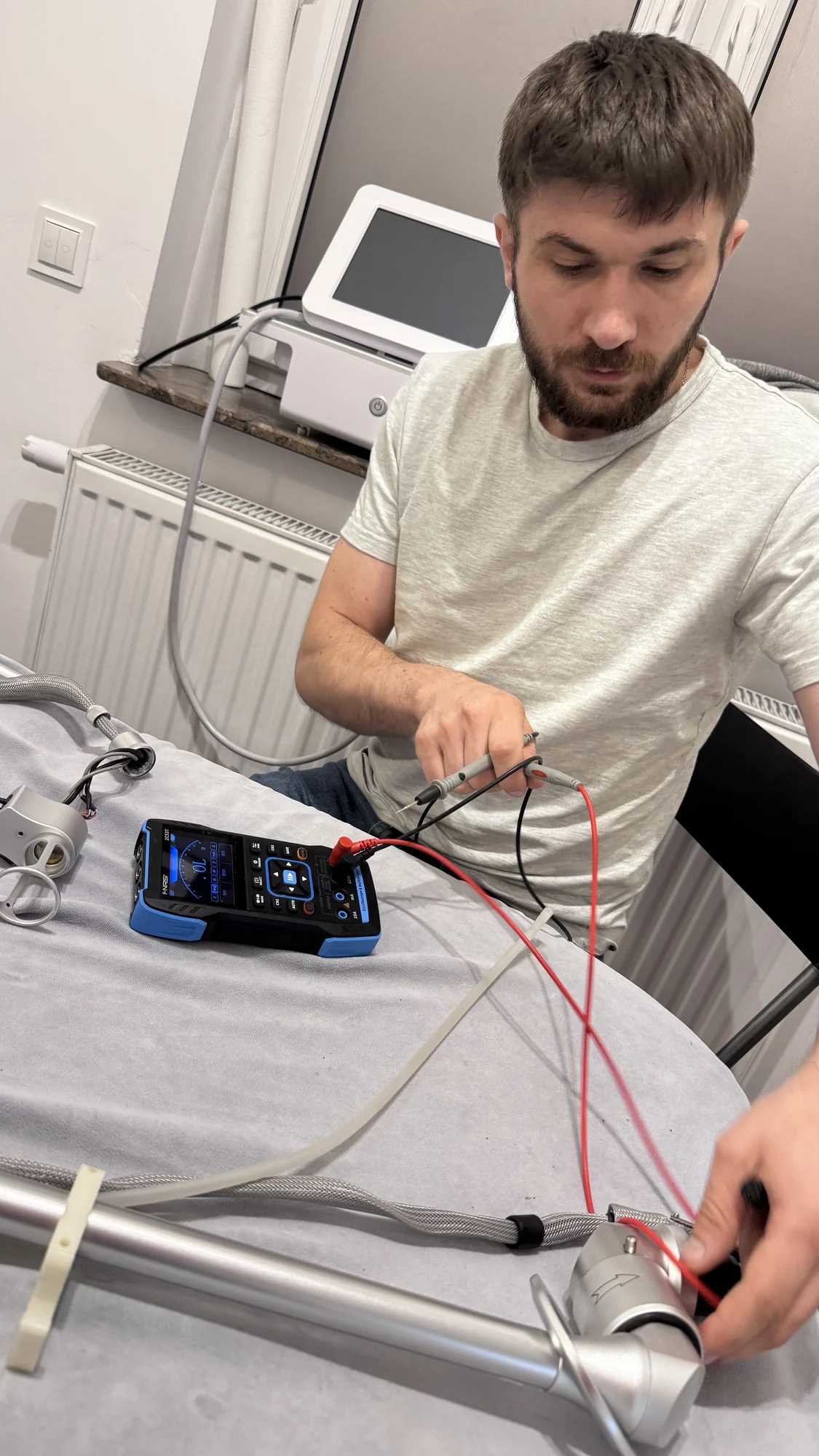
A control circuit depends on both the initiating component and the signal path. After checking the pedal, we therefore examined the handpiece connections and wiring. The aim was to narrow down the fault location, not repeatedly confirm the same symptom.
The work required access to the wiring, tracing connections and checking individual conductors. A multimeter helps establish continuity. Appearance alone cannot provide that answer. Measurements interpreted in relation to the actual circuit distinguish suspicion from an identified fault.
How can a cable look intact yet fail to carry a signal?
The cable’s visible exterior is not the whole electrical connection. Its covering may conceal an internal break. The absence of an obvious cut or detached connector is therefore insufficient to establish circuit integrity. Visual inspection and electrical testing serve different purposes.
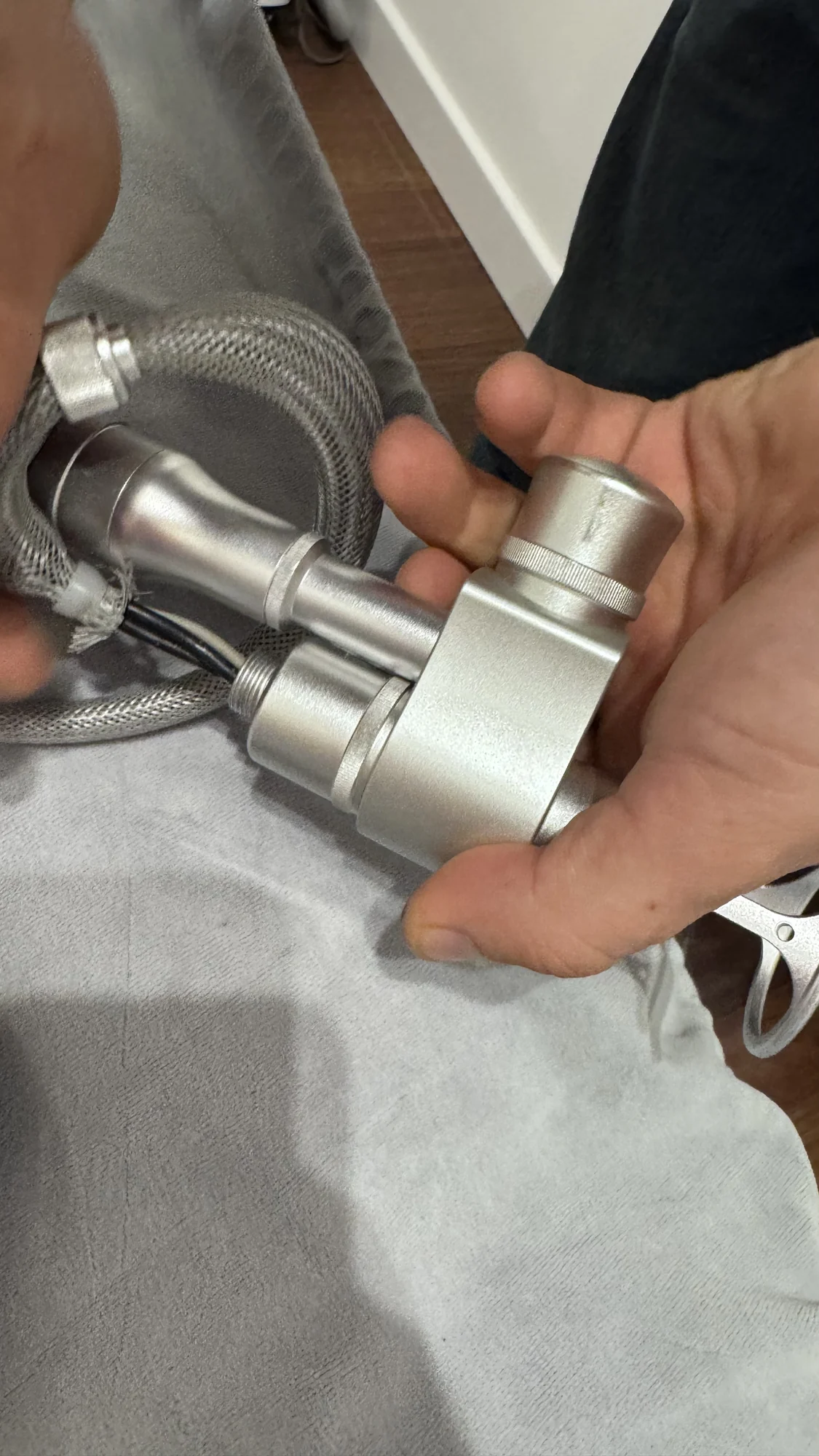
In Poznań, we found an internal break in a small red handpiece wire. We do not assign an unconfirmed mechanical cause to it. What is known is that the break prevented correct command transmission, and complete replacement of the damaged wire restored the system’s response to the pedal.
One small wire — why does finding it take time?
After a repair, it is easy to say that it was only one wire. At the outset, however, the technician does not know which wire is damaged or whether wiring is responsible at all. There is a symptom to explain. Much of the work involves locating the fault, rather than replacing the small part itself.
In this case, the sequence included:
- full pedal diagnostics;
- dismantling the necessary components and accessing the wiring;
- tracing the signal path and checking connectors;
- checking individual wires in sequence;
- locating the internal break;
- completely replacing the damaged wire and routing the wiring correctly;
- reassembling the device and checking its response to controls again.
The size of the replaced part therefore does not measure the scope of servicing. Without the preceding investigation, the wire would not even have been identified as the repair target. Without checks after reassembly, there would be no confirmation that the reported problem had been resolved.
Why would replacing a working pedal not save money?
Assuming that no response means a faulty pedal could lead the client to buy an unnecessary part, pay for installation and still face the same problem. This would add expense and time without repairing the handpiece wire break. These are possible consequences of a wrong decision, not costs incurred in this case.
Diagnostics also helps us avoid replacing working parts. It connects purchases and work scope to an identified cause. We do not quote hypothetical pedal prices or savings: the confirmed fact is that the pedal worked and did not need replacing.
Service example: an urgent visit to Poznań
An aesthetic medicine studio could not use its CO₂ device normally because it responded incorrectly to the pedal. Laser Tech Service carried out urgent on-site visit. Diagnostics confirmed a working pedal, while further examination of the handpiece wiring revealed an internal break in a small red wire.
We replaced the entire wire, restored the connection, routed the wiring and reassembled the dismantled parts. We then checked the device’s control response. The visit also included inspection and necessary maintenance. Afterwards, the device was fully ready for continued use in the studio.
The full photographs and work sequence are presented in the case study urgent CO₂ laser repair in Poznań.
A small component can stop an important function
Part size does not determine problem size. A small wire is part of the circuit just as much as a large, recognisable assembly. If a required connection is open, the other components working correctly cannot ensure the device responds properly.
We discuss a similar wiring role in why a small cable causes big problems, based on another service case. This does not mean every missing response has the same cause. Another device needs diagnostics rather than an automatic search for an identical red wire.
Repair ends with verification of the result
Finding the break explains the symptom; replacing the wire addresses the identified damage. Correct routing, reassembly and repeat testing then allow the result to be assessed. In Poznań, we confirmed restored pedal response after repair.
This is our approach to laser equipment diagnostics and repair: establish the cause, perform the necessary work and verify the result. When reporting a similar problem, describe the device’s response and when it occurs. This helps begin the service discussion but cannot replace examination of the device.
Need equipment diagnostics?
Laser Tech Service provides repairs and on-site laser servicing in Poznań and throughout Poland. Describe the symptoms so we can agree the next steps.