Why does laser handpiece condition matter so much?
The treatment head, also called a handpiece, is one of a hair removal diode laser’s most important and heavily used components.
It is repeatedly lifted, put down and moved, and used for many hours. Over time it may suffer impacts, stress, housing wear and other mechanical damage.
Even a small gap or damaged housing part should not be ignored. If the handpiece loses its seal, contamination can begin entering it.
The problem does not always start with a damaged diode. Sometimes it starts with a small gap in the handpiece.
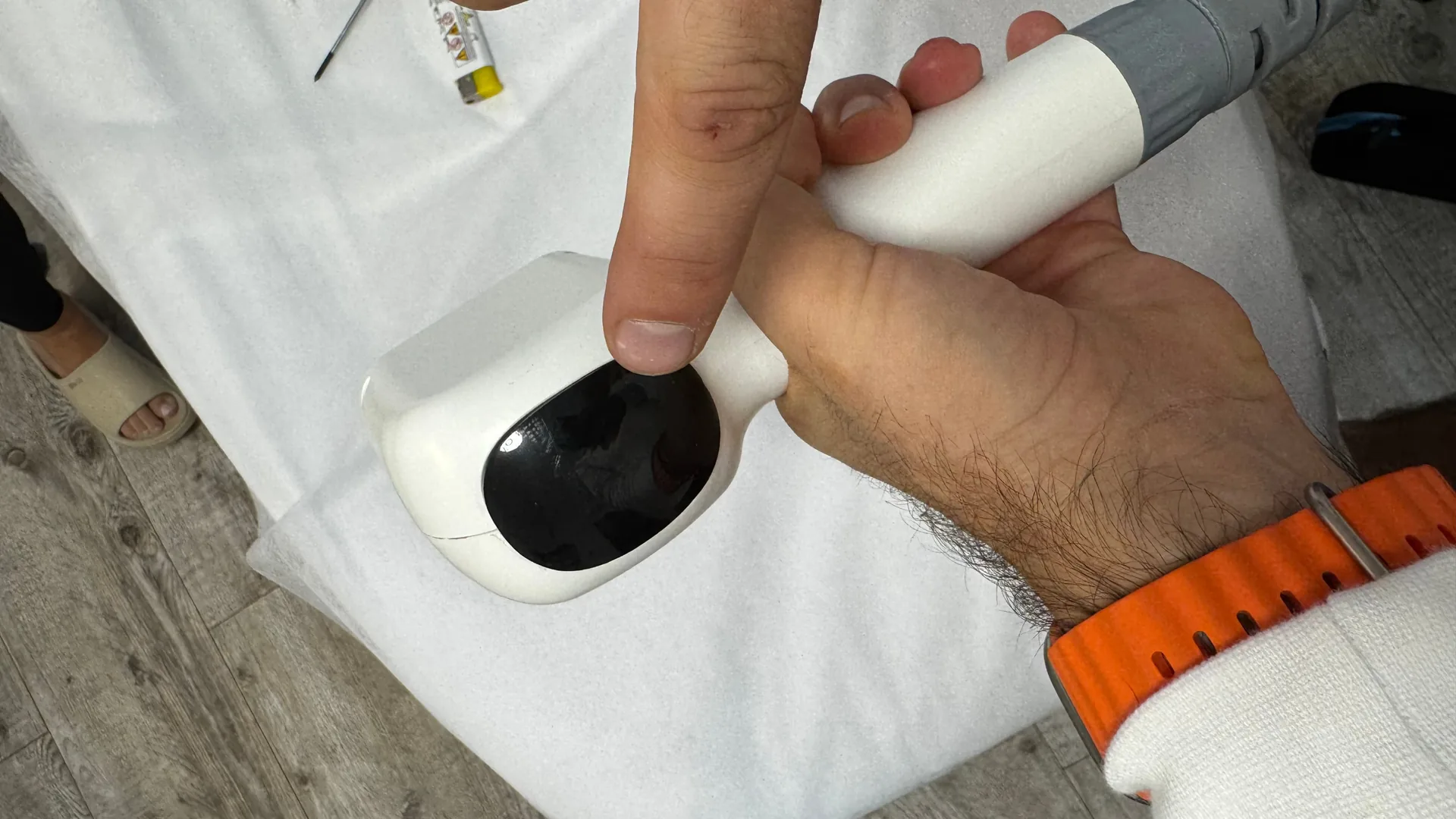
Actual case: a diode laser handpiece with compromised sealing
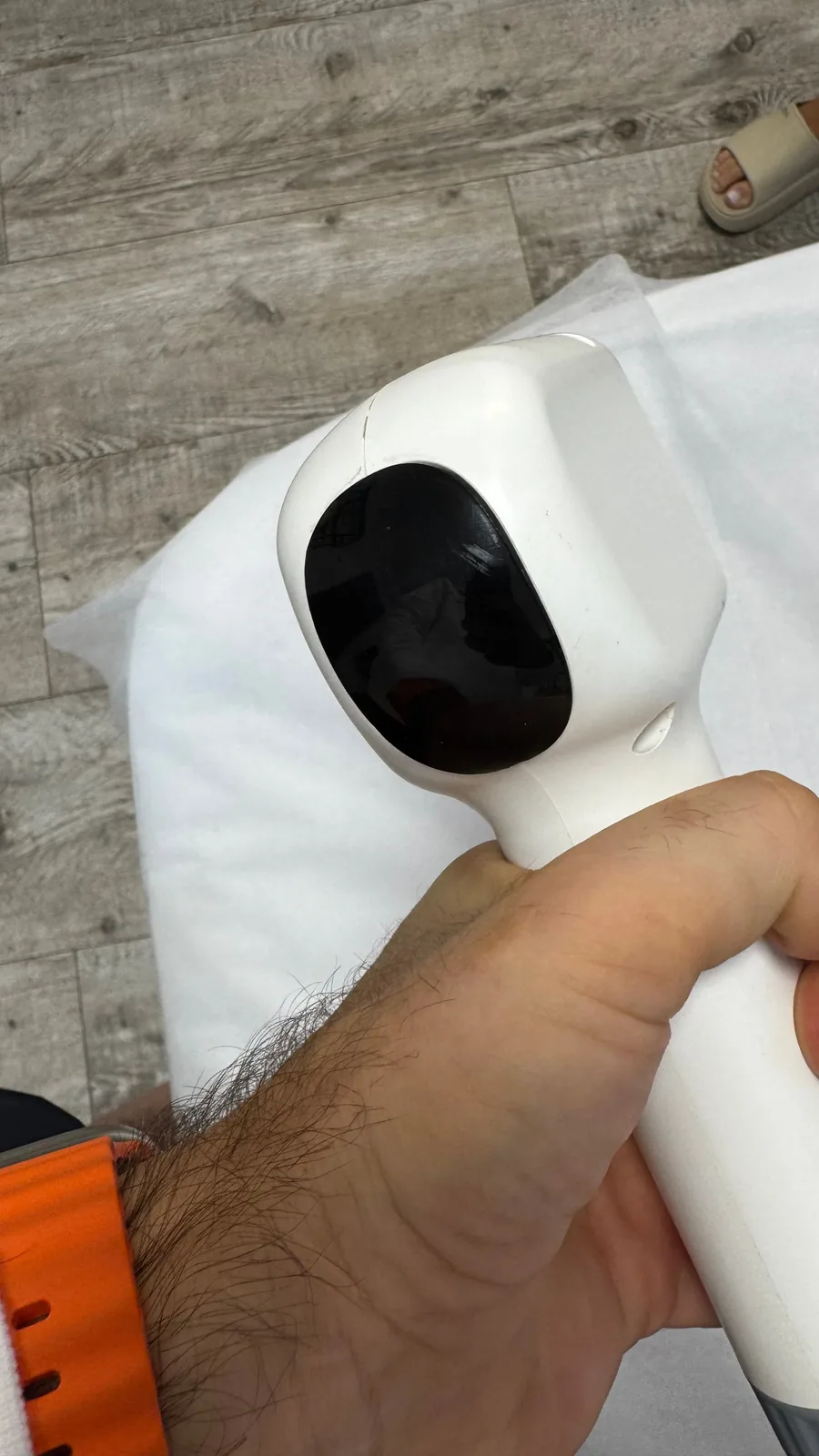
During an on-site service visit, we checked a diode laser handpiece with a damaged housing component.
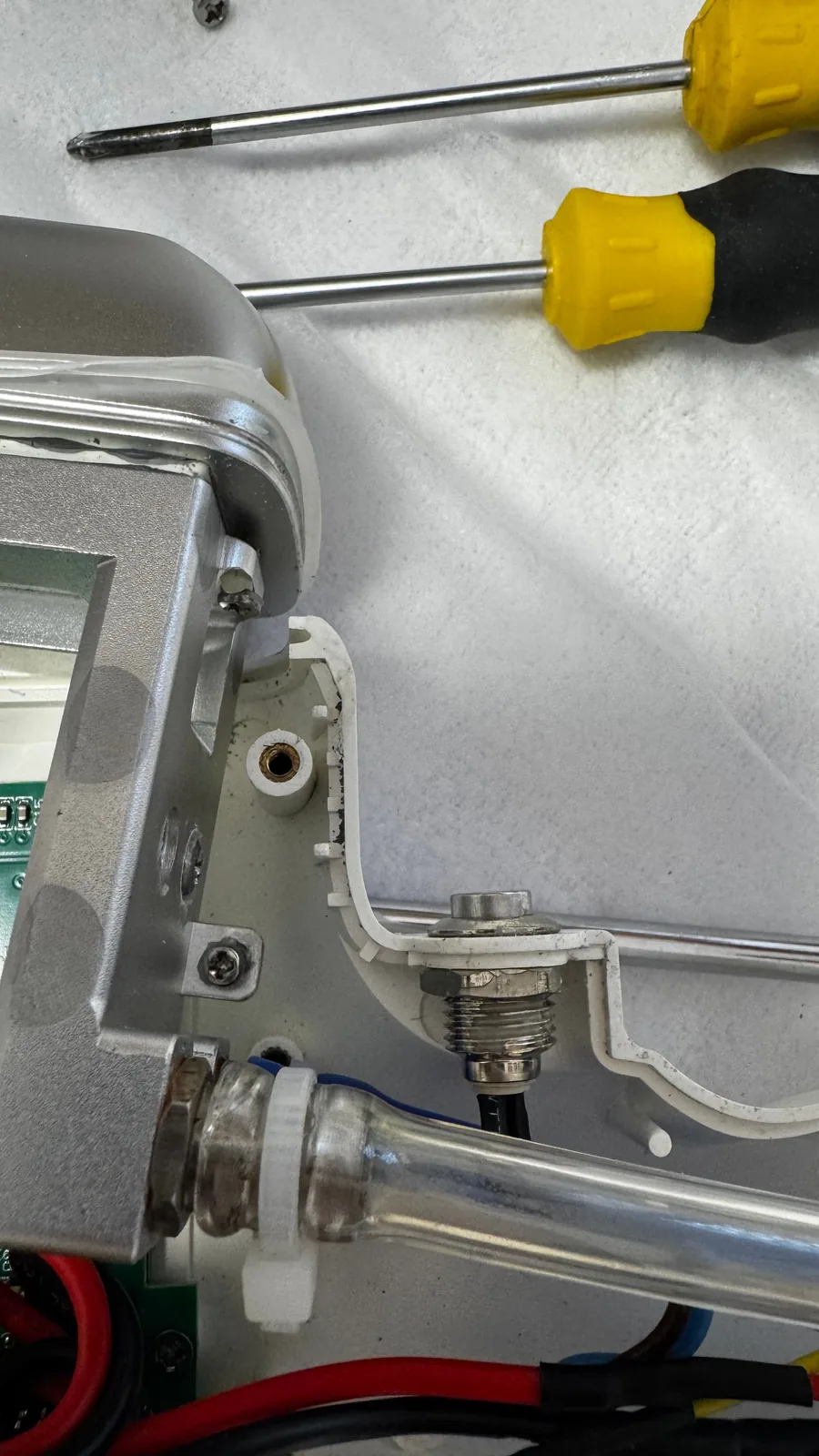
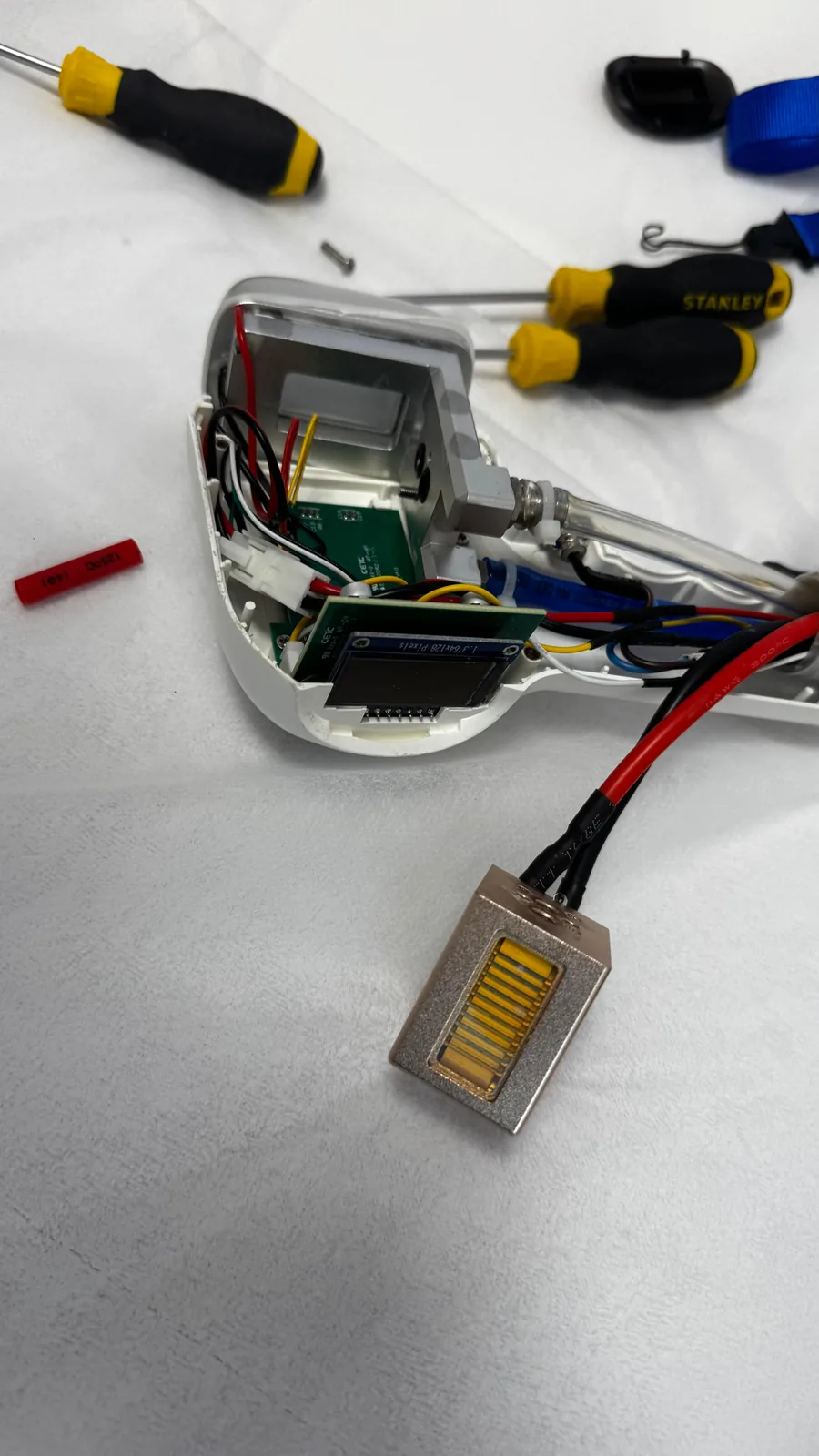
The minor damage had compromised the handpiece seal. It might still have appeared functional externally, but dismantling revealed a different picture.
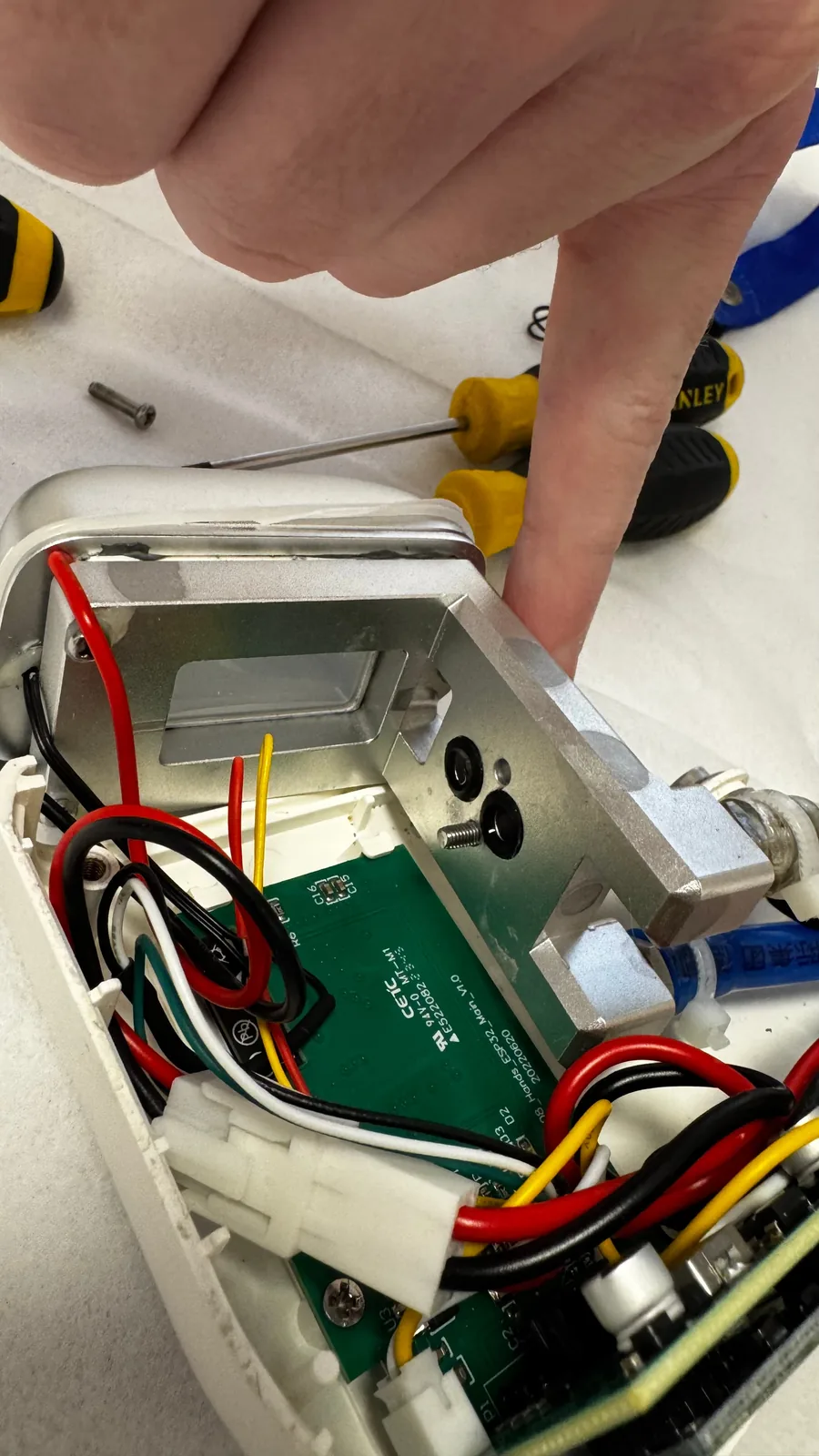
Dust and other small particles had entered. Some had settled around internal components and the optical system.
What happens when handpiece sealing is compromised?
The housing is not merely cosmetic. It also protects internal components from the external environment.
Damage or incorrect reassembly after a previous repair can compromise sealing.
Dust and other small particles can then enter during normal operation. This may continue for a long time without the user seeing it.
Why is contamination of optics and the diode module dangerous?
In a diode laser, energy passes through the optical system. Components in the beam path should be clean and operate under the conditions intended by the design.
Dust and dark deposits can absorb some radiation energy. Instead of passing correctly through the optics, some energy may be converted locally into heat.
This can cause local overheating, poorer energy transmission, accelerated optical degradation and further damage.
Dirty optics can reduce treatment effectiveness
One possible consequence of optical path contamination is less energy reaching the treatment area.
The laser may still pulse without displaying an error, while its actual performance gradually changes.
To the operator, this may appear simply as declining effectiveness. Results weaken, creating a temptation to increase settings.
The actual cause may be inside the handpiece. Repeated performance loss should therefore prompt diode laser diagnostics rather than an automatic increase in device settings.
Can contamination affect treatment safety?
Energy distribution also matters. Dark deposits or other contamination on optical components may absorb energy unevenly.
This can cause local temperature increases and change handpiece operating conditions.
Together with unsuitable treatment settings, this may increase the risk of an unwanted thermal skin response.
Dark spots, dirt, burn marks and other visible optical changes should therefore not be ignored.
If handpiece behaviour changes, contamination is visible or the housing is damaged, establish the cause before further components are affected.
Contamination can lead to more serious damage
The diode module is one of a hair removal handpiece’s most important and expensive components.
Unsuitable conditions around optical components increase the risk of degradation and damage.
Contamination can cause local heating, impair energy transmission and increase stress on components that should operate under controlled conditions.
Promptly addressing a small sealing defect can therefore have significant economic value.
Housing repair, thorough cleaning and correct reassembly are much simpler than later repairing or replacing a damaged diode module.
What did we do during this repair?
The service was carried out directly at the client’s premises.
After initial diagnostics, we dismantled the handpiece and assessed its internal components.
We thoroughly removed accumulated contamination and checked the internal components and the location where sealing had been lost.
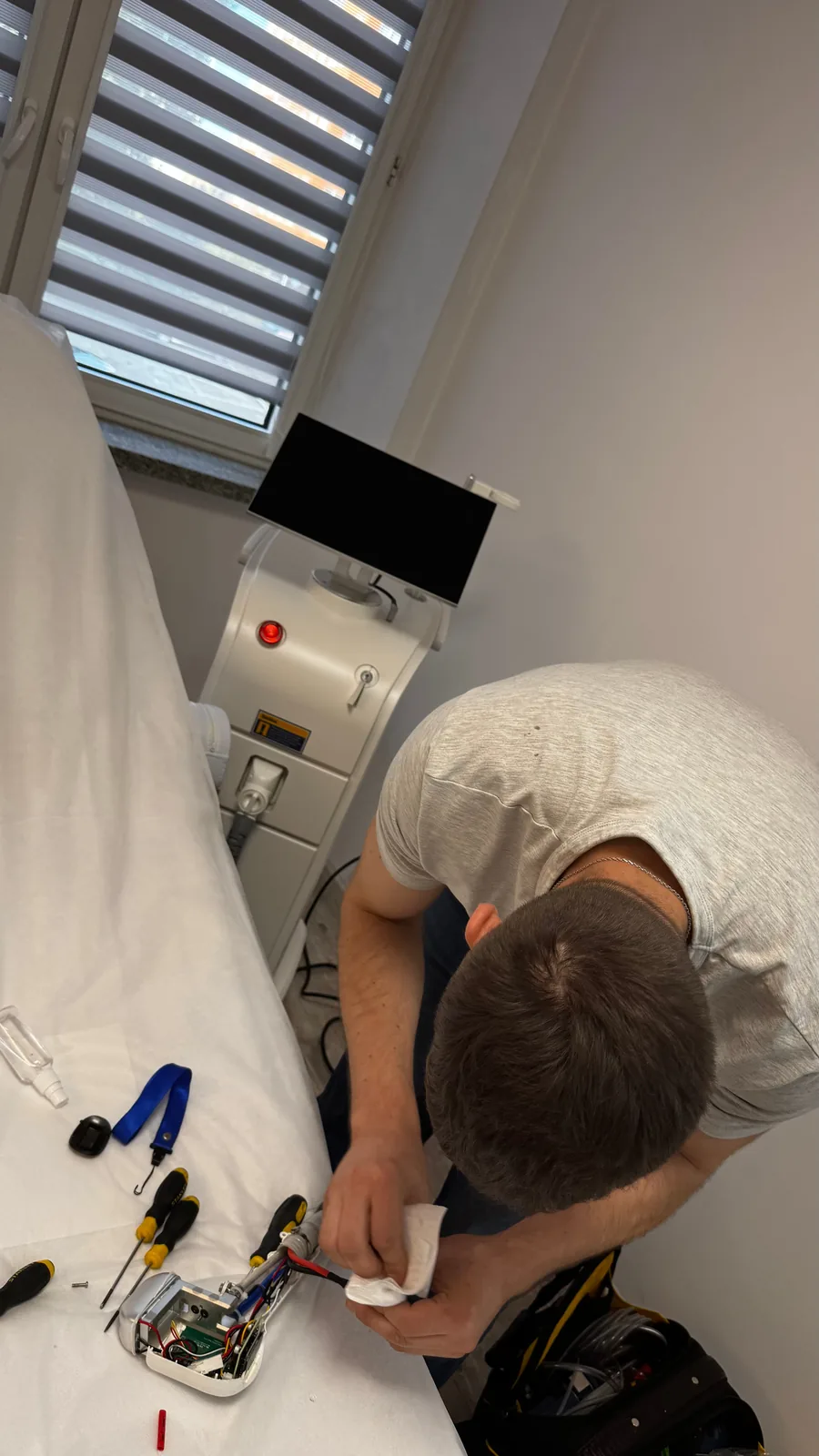
After cleaning, the handpiece was correctly reassembled.
We restored the housing seal and secured the joint with suitable sealing material to reduce the risk of renewed contamination ingress.
Why not wait for complete failure?
A laser can start normally, pulse and show no errors while an internal problem is already developing.
With compromised handpiece sealing, users often cannot see what is happening inside. Dust may accumulate gradually over weeks or months.
Regular checks can therefore identify problems before more expensive damage occurs.
Why should a professional service team dismantle the handpiece?
A diode laser handpiece contains much more than a plastic housing.
Inside are electrical components, wiring, sensors, cooling components, optics and the diode module.
Incorrect dismantling or reassembly can cause further sealing defects, wire damage, cooling problems or misplaced internal parts.
Professional servicing should involve more than closing the housing.
The cause must first be found, the interior assessed, contamination removed, components checked and the handpiece correctly reassembled before restoring its seal.
When should a laser handpiece be checked?
Pay particular attention if:
- the handpiece has been dropped or struck hard,
- gaps or cracks appear in the housing,
- the handpiece has previously been dismantled,
- dark spots or optical contamination are visible,
- the handpiece becomes excessively hot,
- laser effectiveness gradually declines,
- the device behaves differently from before.
Prompt diagnostics may resolve the cause before more serious damage develops.
Servicing is more than repairing breakdowns
Many devices reach a service centre only when the laser stops completely.
Some costly failures can be limited through regular inspection, cleaning and a prompt response to early symptoms.
This is particularly relevant to the handpiece, one of the parts most exposed to wear in daily use.
For more on laser module problem symptoms, also read: 5 signs that a hair removal laser diode needs inspection or replacement .
More information on diagnostics, handpiece refurbishment, cleaning and repairs is available on the laser and aesthetic equipment servicing page .
Actual examples of our repairs are published in Case studies.
Regular servicing can reduce the risk of expensive failure
This case shows that a problem does not always begin with the most expensive component.
Sometimes a small housing defect comes first. Sealing is then lost, contamination enters and further problems follow.
A laser handpiece should therefore be checked before the device stops working.
Regular inspections, cleaning and prompt attention to mechanical damage help maintain condition and reduce the risk of more serious failure.
Frequently asked questions
Why is diode laser handpiece sealing so important?
A sealed housing limits dust and other contamination entering the handpiece. Loss of sealing can contaminate internal components and optics.
Can dirty optics reduce hair removal effectiveness?
Yes. Optical path contamination can restrict energy transmission, reducing the actual energy reaching the treatment area.
Can a laser with a damaged handpiece still be used?
If the housing is damaged, a gap appears or sealing is suspect, have the device checked first. Continued use may allow further contamination inside.
How often should a diode laser be serviced?
Frequency depends on the model, usage intensity and manufacturer guidance. Regardless of the schedule, mechanical handpiece damage or changed behaviour should be checked promptly.
Having a problem with a diode laser handpiece?
Describe the symptoms noticed during operation. You can also send a photograph or video. We will assess where diagnostics should begin.